
Outdoor Furniture Materials: Which is Best for Your Restaurant’s Needs?
Wood Furniture: Classic Elegance
Wooden outdoor furniture has long been cherished for its classic and timeless appeal. It brings an element of natural beauty to your outdoor space and can create a warm and inviting ambiance for your patrons. Some popular wood choices for outdoor furniture include teak, cedar, and eucalyptus. Teak is renowned for its resistance to rot and decay, making it an excellent choice for outdoor settings. It weathers to a beautiful silvery gray over time, adding to its charm. However, teak furniture can be quite expensive, so it’s important to consider your budget. Cedar is another popular wood for outdoor furniture. It’s naturally resistant to insects and decay, which makes it a durable choice. Cedar furniture has a lovely reddish hue and is known for its lightweight nature, making it easy to move around your restaurant’s outdoor area. Eucalyptus is a cost-effective alternative to teak, offering similar durability and resistance to rot and decay. It’s a sustainable choice, as eucalyptus trees grow quickly, and their wood can be harvested without harming the environment.Metal Furniture: Modern and Sturdy
Metal outdoor furniture is the epitome of modernity and is known for its durability. Some popular metal options for outdoor furniture are aluminum, wrought iron, and stainless steel. Aluminum is a lightweight and rust-resistant metal, making it an excellent choice for outdoor furniture. It’s easy to move and doesn’t require much maintenance. Additionally, it can be molded into various styles and designs to suit your restaurant’s aesthetic. Wrought iron exudes elegance and strength. It’s a heavy and durable metal that can withstand the elements. Wrought iron furniture often features intricate designs, adding a touch of sophistication to your outdoor space. However, it may require periodic maintenance to prevent rust. Stainless steel is highly resistant to corrosion, making it ideal for coastal or humid environments. It’s easy to clean and maintain, which is a practical advantage for busy restaurant owners.Plastic Furniture: Budget-Friendly and Practical
Plastic outdoor furniture is a budget-friendly option that is easy to clean and maintain. It’s a practical choice for restaurants with high traffic and where budget considerations are essential. Polypropylene and resin are common materials used in plastic furniture. They are lightweight, durable, and resistant to moisture, making them suitable for outdoor use. While they may not offer the same aesthetic appeal as wood or metal, they provide a cost-effective solution for outdoor seating.Wicker Furniture: A Blend of Style and Comfort
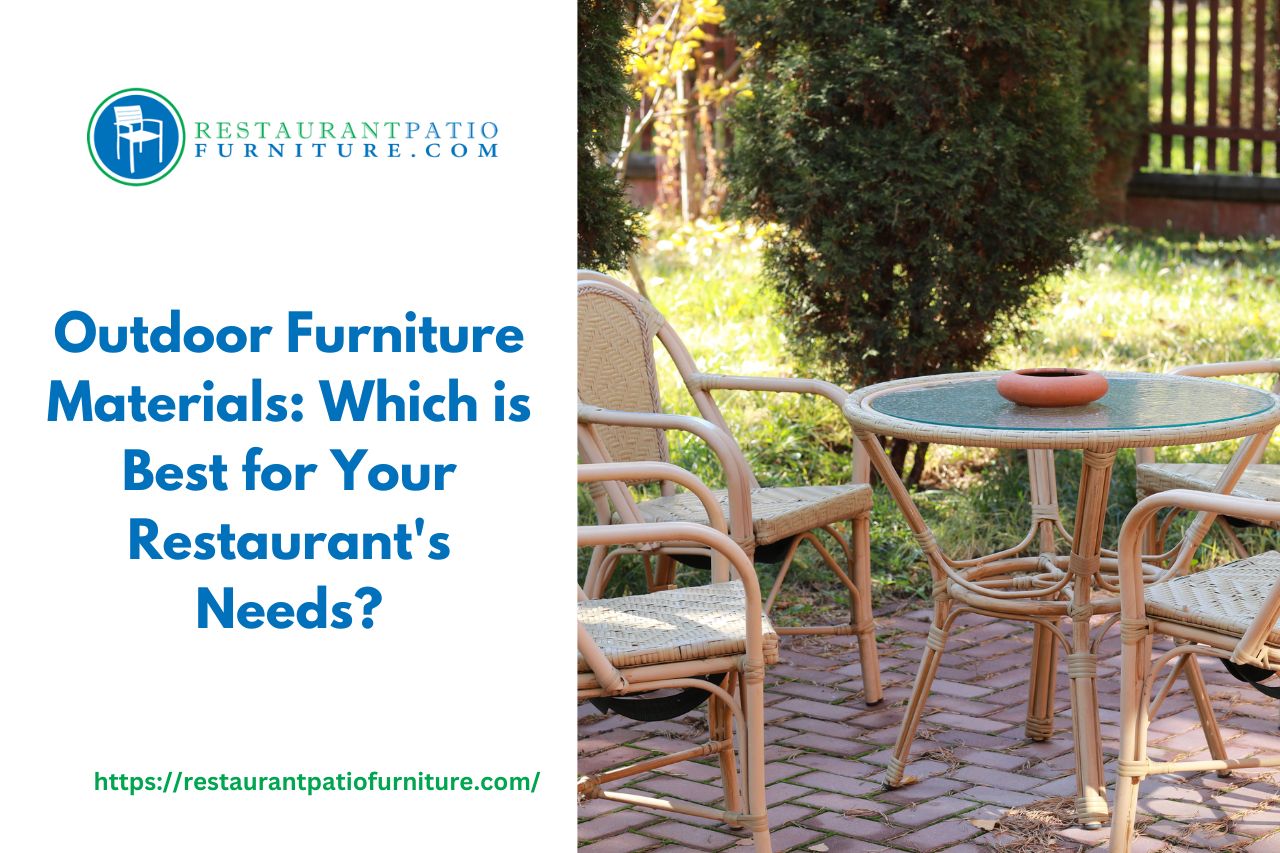
Wicker furniture combines the charm of natural materials with modern design. It is typically made from rattan, a type of palm, and is known for its woven texture. Wicker furniture is comfortable and visually appealing, and it can give your restaurant’s outdoor space a cozy and welcoming feel. However, it may require occasional maintenance to ensure that the woven material stays in good condition.Factors to Consider
When choosing outdoor furniture for your restaurant, there are several factors to consider:Climate and Location
Your restaurant’s location and climate play a significant role in determining the most suitable materials for your outdoor furniture. For instance, if you are in a coastal area, you’ll want materials that can withstand salt and moisture. In a dry, sunny climate, UV resistance may be a more critical factor.Budget
Your budget will inevitably influence your choice of outdoor furniture materials. While high-end materials like teak and stainless steel can be more expensive, there are budget-friendly options like plastic and resin that offer excellent value for money.Maintenance
Consider the level of maintenance you are willing to invest in your outdoor furniture. Some materials, like wood and wrought iron, may require periodic maintenance, such as sealing, staining, or rust prevention. Others, like plastic and aluminum, are low-maintenance options.Style and Brand Identity
Your restaurant’s style and brand identity should guide your choice of outdoor furniture. The right furniture can enhance the overall atmosphere and ambiance you want to create for your customers. In conclusion, the choice of outdoor furniture materials for your restaurant is a critical decision that impacts both the aesthetics and functionality of your outdoor space. It’s essential to consider factors such as climate, budget, maintenance, and your restaurant’s style. By making an informed choice, you can create an outdoor dining experience that delights your patrons and sets your restaurant apart.FAQs
The best weatherproof outdoor furniture for restaurants is made from materials that resist moisture, sun exposure, and temperature changes. Aluminum is a common choice because it does not rust and holds up well in outdoor conditions.
Powder-coated metal also performs well, as the coating adds a protective layer that reduces wear from weather. Synthetic wicker and powder-coated aluminum materials are often used because they resist moisture and are easy to clean. Sintered stone table tops are another strong option for outdoor dining because the material handles heat and moisture well.
The best materials for outdoor furniture that resist rust are typically aluminum and other non-ferrous metals. Aluminum is widely used in restaurant patios because it is lightweight and naturally resistant to corrosion. Unlike traditional steel, aluminum does not react to moisture in the same way, making it suitable for long-term outdoor use.
Cast iron is also commonly used in outdoor furniture, especially for table bases, due to its weight and stability. While it is strong and durable, it is typically finished with protective coatings to help reduce the risk of rust when exposed to outdoor conditions.
Durability in outdoor restaurant furniture depends on both material strength and resistance to environmental conditions. Powder-coated steel is great for its strength and ability to handle heavy use in high-traffic areas. Aluminum is another durable option, especially in settings where rust resistance is important.
Sintered stone table tops are among the most durable surfaces, as they resist scratches, heat, and moisture. Powder-coated metal and reinforced aluminum constructions also perform well because they are built to withstand repeated use without warping or fading quickly.
Maintaining outdoor restaurant furniture involves regular cleaning and basic care to keep materials in good condition. Most surfaces can be cleaned with mild soap and water to remove dirt, grease, and debris. Metal frames should be checked occasionally for signs of wear in protective coatings.
Table tops made from high-pressure laminate or sintered stone can be wiped down easily after service. Upholstered outdoor seating should be cleaned based on the material type and the manufacturer’s recommendations. Covering furniture during extended periods of non-use can help reduce exposure to harsh weather.
Routine maintenance helps extend the lifespan of outdoor furniture while keeping the dining area clean and consistent.
Coastal environments present additional challenges due to salt air, humidity, and constant exposure to moisture. Aluminum is one of the best materials for these conditions because it does not rust and holds up well against corrosion. Metal-framed furniture with weather-resistant finishes and synthetic wicker are also commonly used in coastal settings because they resist moisture and do not break down easily.
Powder-coated metal can perform well if the coating remains intact. It helps protect the underlying material from corrosion, wear, and exposure to harsh outdoor elements. Sintered stone table tops are another strong option for outdoor dining in coastal areas as the material resists both moisture and temperature changes. This helps the tables maintain their structure and appearance even in demanding outdoor environments.
Metal and aluminum-based furniture can be a better, more practical option for restaurants, especially in outdoor settings. These materials are structurally strong and allow for reliable use in high-traffic environments while still being manageable to move and rearrange as needed.
Aluminum furniture also offers strong moisture resistance, making it suitable for outdoor use in varying weather conditions. High-quality commercial-grade metal furniture can handle frequent use without losing its structural integrity or finish quickly.
However, lower-quality materials or finishes may not hold up as well over time. For restaurants with a high level of activity, it is important to choose durable, commercial-grade outdoor furniture materials that maintain their structure and appearance with frequent use. When selected carefully, metal furniture can support both flexibility and long-term performance in outdoor dining areas.
Mixing different materials in an outdoor dining area is a common approach that can create a more balanced and visually interesting space.
For example, aluminum chairs can be paired with teak or high pressure laminate tables to combine durability with a warmer aesthetic. Metal or aluminum seating can be used alongside metal table bases to maintain consistency alongside variety.
The key is to choose materials that perform well together and share similar durability levels. Mixing materials should also support the overall layout and design rather than creating contrast that feels unplanned. A thoughtful combination of materials can improve both functionality and visual consistency.
The lifespan of outdoor restaurant furniture depends on the materials used, the level of exposure to weather, and how well it is maintained.
Commercial-grade furniture made from aluminum, powder-coated metal, or steel-based constructions can last several years under regular use. Sintered stone table tops and durable laminate surfaces also contribute to longer performance due to their resistance to wear.
Regular cleaning and basic maintenance can extend the life of these materials. In high-traffic restaurant environments, furniture is used frequently, so selecting durable materials plays a major role in how long it continues to perform effectively over time.
There is no singular type of outdoor furniture that’s best for use all year-round. Furniture designed for year-round use must be able to handle changing weather conditions while maintaining durability. Frames made from aluminum or powder-coated metal are widely used for outdoor furniture. Their resistance to rust helps them perform reliably in both hot and wet conditions.
Weather-resistant metal and aluminum materials remain dependable throughout the year, even with constant exposure to the elements.
For table surfaces, sintered stone stands out as a durable all-season choice. It handles temperature changes and outdoor exposure without damage.
Selecting materials that are built for outdoor use allows restaurants to keep their patio seating available throughout the year without frequent replacements or major maintenance.